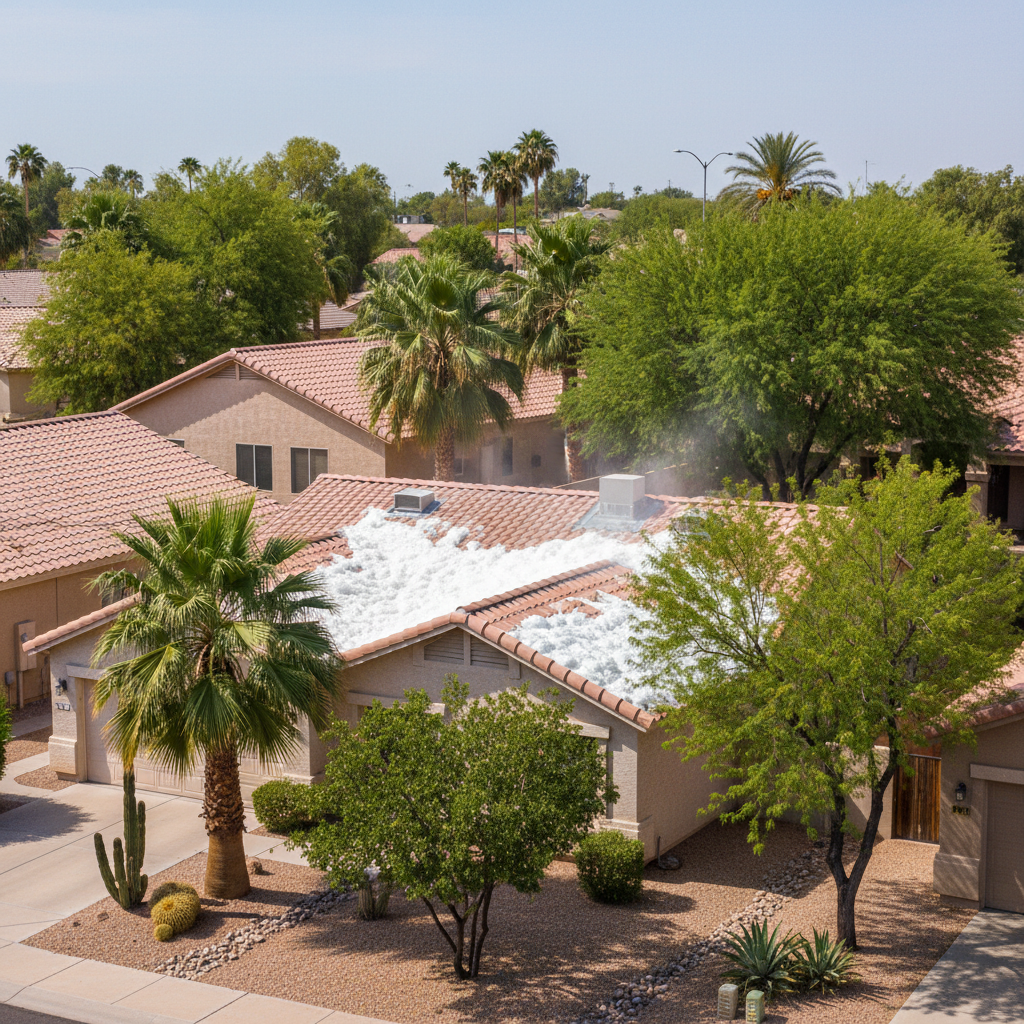
When you walk into your living room on a July afternoon and feel like an oven hit you, that is standard life in the Sonoran Desert. Here in Glendale, AZ, summer temperatures routinely push past 110 degrees, turning standard attics into literal bake ovens that can easily clear 140 degrees up top. When an attic gets that hot, it acts like a giant radiator, pushing heat straight down through your ceiling drywall and forcing your air conditioner to work overtime.
Glendale Spray Foam Insulation sees this exact scenario all the time across local neighborhoods. Whether you live in an older mid-century ranch home near downtown or a two-story build out by Arrowhead Ranch, that builder-grade insulation from ten or twenty years ago just is not cutting it anymore. Over time, loose-fill cellulose and fiberglass batts settle, compress, and lose their R-value. Dust gets trapped, air ducts leak into the dead space, and suddenly your electric bill triples while your house still feels stuffy.
What Makes Glendale Attics Different
You cannot treat a desert roof deck the same way people up north treat theirs. We do not worry much about freezing pipes or heavy snow loads here. Our entire battle is thermal retention and radiant heat gain. When the sun beats down on concrete tile and asphalt shingles day after day, that thermal energy transfers directly downward.
- Your AC runs non-stop from May through September.
- Ceiling drywall feels warm to the touch by mid-afternoon.
- A/C ductwork running through the attic loses up to thirty percent of its conditioned air efficiency.
Glendale Spray Foam Insulation spends a lot of time crawling through local roof spaces, and the story is almost always the same. Thin insulation layers and unsealed attic penetrations let conditioned air escape upward while baking heat radiates straight into the living areas below.
Fixing the Problem at the Source
Upgrading your attic setup is not just about blowing an extra layer of material on top of the old dust. True comfort requires looking at the whole system. Air sealing matters just as much as depth. If you have gaps around your recessed lighting, plumbing stacks, and top plates, all that cool air you are paying for leaks right out into the attic space.
Adding proper thermal mass or switching to modern insulation techniques changes how your entire house holds temperature. Rooms stay cooler longer, your HVAC unit cycles normally instead of running twenty-four hours a day, and you actually notice a drop in your monthly utility statements. For homeowners in Glendale, Glendale Spray Foam Insulation recommends taking a look at what is happening overhead before another heatwave rolls through town.